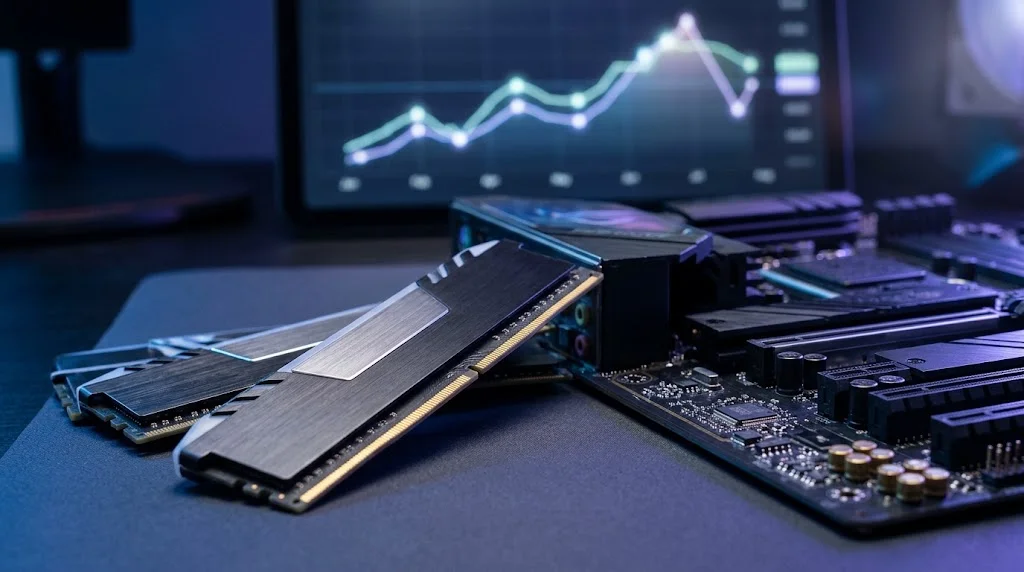
Anyone building a gaming desktop, upgrading a workstation, or sourcing enterprise hardware has felt the sudden sting of volatile memory pricing. Over the past several quarters, memory pricing has moved through sharp fluctuations, leaving builders wondering whether to purchase kits now or hold out for a market correction. Navigating this unpredictable territory requires looking at hard data rather than speculation. Using a detailed ram prices chart allows you to see exactly where component pricing has been, where it stands today, and where spot quotes are headed next.
At present, memory kits are operating under elevated baseline figures compared to the historic lows seen in prior cycles. While brief dips suggest to some buyers that the market has permanently cooled, industry supply signals show that ongoing fab reallocations continue to keep upward pressure on consumer modules. This definitive ram prices chart guide breaks down current retail averages, examines the semiconductor forces shaping DDR4 and DDR5 supply, and provides actionable advice so you do not overpay for memory capacity.
Live Market Baseline: The Consolidated RAM Prices Chart
Evaluating memory market dynamics starts with examining typical retail figures across mainstream standards. Tracking kit prices week over week reveals distinct pricing bands depending on transfer speed, latency timings, and module generation.
Consulting a structured ram prices chart highlights the current cost landscape across common consumer capacities:
| Module Standard & Capacity | Speed & Timings | Historical Baseline Range | Current Average Retail Price | Market Trajectory |
| 16GB (2x8GB) DDR4 | 3200 MT/s CL16 | $35 to $45 | $55 to $75 | Plateaued / Elevated |
| 32GB (2x16GB) DDR4 | 3600 MT/s CL18 | $60 to $80 | $110 to $145 | Steady |
| 32GB (2x16GB) DDR5 | 5600 MT/s CL36 | $85 to $105 | $130 to $165 | Fluctuating |
| 32GB (2x16GB) DDR5 | 6000 MT/s CL30 | $105 to $125 | $160 to $210 | Moderate Volatility |
| 64GB (2x32GB) DDR5 | 6000 MT/s CL30 | $190 to $230 | $310 to $390 | Upward Pressure |
Reviewing this ram prices chart makes it clear that while ultra-budget DDR4 remains relatively accessible for secondary machines, mainstream DDR5 kits have settled into a considerably higher pricing bracket. Buyers tracking these numbers can quickly assess whether current shelf prices represent fair value or temporary distributor markups.
DDR4 vs DDR5 Price Trends: Historical Trajectory and the Break-Even Point
Understanding how DDR4 and DDR5 pricing diverged requires examining where these technologies stood during their transition window. Historically, as a newer memory standard matures, its price per gigabyte steadily decreases until it crosses over with the legacy standard. DDR5 initially followed this conventional path, dropping from its early launch premiums down toward reasonable mainstream affordability.
However, unexpected macro trends disrupted that orderly descent. Rather than DDR4 becoming dirt-cheap forever, major memory fabrication plants started winding down production lines dedicated to legacy silicon. As cleanrooms scaled back DDR4 wafer runs, consumer stock thinned out. The lowest price on DDR5 and DDR4 kits began reflecting two completely different market forces: DDR4 grew more expensive due to deliberate supply tapering, while DDR5 rose because overall demand surged faster than production yields could keep up.
This divergence created a unique landscape where DDR4 ddr5 price trends stopped behaving in tandem. While DDR4 memory has reached a price plateau, DDR5 has experienced periodic price spikes. System builders analyzing a historical ram prices chart will notice that DDR4 is no longer the automatic bargain it was two years ago, altering the calculus for choosing which platform generation to adopt.
The Semiconductor Engine: Why Did DDR5 Memory Costs Tripled?
To answer why DDR5 costs tripled during peak supply crunches, one must look at cleanroom economics across the leading memory producers: Samsung, SK Hynix, and Micron. These three chipmakers produce the vast majority of the world’s DRAM chips, and their production capacity is finite. When hyper-scale cloud providers and enterprise infrastructure firms placed massive orders for AI acceleration hardware, the industry underwent a tectonic shift.

Enterprise AI accelerators rely on High Bandwidth Memory, known as HBM. Producing HBM silicon requires significantly more raw wafer surface area and sophisticated packaging compared to standard consumer DDR5 dies. Because HBM delivers vastly higher profit margins, major foundries diverted cleanroom capacity toward enterprise wafers. This AI-driven DRAM shortage directly throttled the output of consumer desktop memory modules.
When cleanroom allocation shifted, DRAM suppliers quarterly pricing reports immediately reflected the shortage. Memory module makers like Corsair, G.Skill, Kingston, and TeamGroup were forced to absorb steep silicon contract increases, which trickled down into retail channels. While headlines sometimes suggest a RAM price-stabilization trend, hardware analysts warn that any price flattening can be brief. A sudden spike in enterprise procurement can instantly tighten consumer supply lines once again.
The Sweet Spot Buying Matrix: Matching Kits to Real-World Builds
Because volatile memory pricing can easily disrupt a system budget, choosing the correct configuration prevents unnecessary spending. The key is identifying the exact performance thresholds that modern desktop platforms require without overspending on marginal gains.
Budget Gaming and Office Rigs
For sub-$600 systems, finding the cheapest DDR4 memory remains a practical strategy. A basic 16GB or 32GB DDR4-3200 CL16 kit provides sufficient bandwidth for esports titles and daily productivity on platforms like AMD AM4 or entry-level Intel LGA1700 motherboards. However, avoid spending extra for high-tier DDR4 binned kits, as that money is better saved for a modern platform upgrade later.
Mainstream Gaming and General Performance
For modern setups built on AMD AM5 or newer Intel sockets, the industry consensus sweet spot is a 32GB dual-channel kit running at 6000 MT/s with CL30 timings. Finding the least expensive 32GB DDR5-6000 memory kit or a discounted 32GB Corsair Vengeance DDR5-6000 package provides the optimal balance of memory controller stability, low latency, and realistic pricing. Kits rated well beyond 6000 MT/s command heavy price premiums but yield diminishing returns in everyday gaming workloads.
Workstations and Intensive Creation Tasks
Content creators, software developers, and video editors frequently require 64GB or more. The lowest price on DDR5 and DDR4 memory of all capacities often reveals a steep per-gigabyte markup on 64GB configurations. When sourcing 64GB for DDR5 systems, prioritize a dual-DIMM kit (two 32GB sticks) rather than populating four motherboard slots. Running four DDR5 DIMMs at rated speeds places severe stress on modern consumer memory controllers, often forcing speeds to downclock significantly to maintain system stability.
The Full Platform Math: Calculating Total Upgrade Cost Beyond RAM
A common error made by builders studying a ram prices chart is viewing memory modules in complete isolation. In practice, choosing memory is deeply tied to motherboard choice and processor architecture, meaning RAM costs directly influence your total build expense.
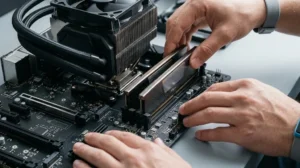
Consider a builder deciding between a legacy DDR4 platform and a contemporary DDR5 system:
-
Platform A (Legacy DDR4): An affordable B550 or B760 DDR4 motherboard paired with a mid-range processor and a 32GB DDR4-3200 kit. The memory module price is lower, and the motherboard itself carries a discounted price tag. However, this platform offers virtually no forward upgrade path without replacing the motherboard and memory later.
-
Platform B (Modern DDR5): An AM5 or modern Intel board paired with a current-generation processor and a 32GB DDR5-6000 kit. While the memory kit may cost $50 to $80 more, the system natively supports next-generation processors, PCIe 5.0 lanes, and future memory standards.
When calculating the total platform cost, spending slightly more for a DDR5 system often prevents premature platform obsolescence. Choosing DDR4 simply to save a few dollars on the memory kit can turn into a false economy if you have to replace your core motherboard and memory in eighteen months.
Spotting Fake and Relabeled Memory Modules in a Tight Market
Whenever hardware prices climb and availability tightens, the grey market experiences an influx of counterfeit and relabeled memory products. Unscrupulous third-party marketplace sellers capitalize on shoppers hunting for deals by dressing up substandard silicon with flashy aesthetic heatspreaders.
A common tactic involves taking discarded, low-speed server pulls or poorly binned chips and flashing their Serial Presence Detect (SPD) EEPROM chips to advertise higher frequencies like DDR4-3600 or DDR5-6000. Under real-world gaming loads or stress tests, these modules frequently suffer from persistent blue screens, memory corruption, and failure to boot with XMP or EXPO profiles enabled.
To safeguard your hardware investment, verify your memory configuration immediately upon unboxing:
-
Physical Inspection: Authentic modules from reputable manufacturers have crisp, laser-etched PCB markings, neatly applied thermal pads, and serial labels that match the box barcode precisely.
-
Software Verification: Use free diagnostic utilities like CPU-Z or HWiNFO to inspect the SPD tab. Verify that the DRAM manufacturer listed matches authentic silicon vendors such as Samsung, SK Hynix, or Micron.
-
Stability Testing: Run MemTest86 or TestMem5 across several passes at stock and profile speeds. Legitimate memory kits will pass without a single memory addressing error.
Always buy from verified, authorized retailers with transparent return windows so you can quickly return any suspect kits.
Performance Optimization: How to Extract Value from Your Current RAM
If current market numbers on the ram prices chart are too high for your current budget, you can often extract substantial performance from the RAM you already own without spending a dollar.
First, check that your memory sticks are installed in the correct motherboard channels. Most motherboards require dual-channel kits to be seated in slots 2 and 4 (counting outward from the CPU socket). Running sticks in adjacent slots drops the system into single-channel mode, cutting potential bandwidth in half and causing noticeable micro-stuttering in modern games.
Second, ensure that your system is running at its rated speed. Many builders assemble their PC only to run their memory at basic JEDEC fallback speeds (such as DDR4-2133 or DDR5-4800) because they forgot to enable XMP (Extreme Memory Profile) or EXPO (Extended Profiles for Overclocking) inside their motherboard BIOS. Turning this setting on instantly unlocks the speed and timings printed on your modules.
Finally, manage memory overhead inside your operating system. Modern web browsers and background utility software consume substantial memory reserves over time. Disabling unnecessary startup tasks, trimming aggressive browser extensions, and ensuring your Windows paging file is assigned to a fast NVMe solid-state drive can keep a 16GB system feeling responsive even under demanding multitasking conditions.
Memory Market Forecast: When Will RAM Prices Drop?
For consumers waiting on the sidelines, the central question is whether patience will pay off with lower prices. Forecasting memory pricing requires evaluating fab expansion projects, fabrication yield improvements, and enterprise procurement cycles.
DRAM contract market reports indicate that memory manufacturers remain cautious about oversupplying the market. After suffering steep financial losses during earlier downturns, suppliers are keeping factory line output tightly managed. While greenfield fabrication facilities are under construction in several regions, these massive multi-billion-dollar fabs require years to become fully operational and produce commercial silicon at scale.
As a result, industry analysts project that consumer memory prices will remain relatively firm with occasional modest corrections rather than returning to historic rock-bottom basement pricing overnight. For prospective PC builders, trying to time the absolute bottom of a memory cycle rarely pays off. If you need a reliable machine today, identifying a stable sweet-spot kit using a dependable ram prices chart is a far sounder approach than delaying an entire system build for months in hopes of saving twenty dollars.
FAQs
What does a standard ram prices chart track?
A standard ram prices chart tracks spot pricing, retail averages, and contract costs for computer memory across multiple capacities (such as 16GB, 32GB, and 64GB) and generations (primarily DDR4 and DDR5). It helps consumers and system builders visualize market trends and identify the best buying opportunities.
Is 16GB RAM still sufficient for gaming and modern workloads?
While 16GB can handle lightweight gaming, esports titles, and everyday office applications, 32GB has quickly become the recommended sweet spot for contemporary desktop gaming and productivity. Many recent open-world gaming releases allocate more than 16GB of system memory for textures, background assets, and operating system overhead.
Why do DDR5 prices fluctuate more than DDR4?
DDR5 prices fluctuate more dynamically because DDR5 is actively integrated into enterprise data centers, AI servers, and modern client computing platforms. Because cleanroom wafer capacity is shared between consumer DDR5 and high-margin enterprise memory like HBM, enterprise demand swings directly impact retail DDR5 inventory.
Does RAM brand matter, or is the underlying chip manufacturer more important?
While retail brands like Corsair, G.Skill, Kingston, and TeamGroup design heatspreaders, PCB layouts, and warranty support, the actual silicon DRAM dies inside are manufactured by one of three companies: Samsung, SK Hynix, or Micron. For advanced overclocking, knowing the underlying die type (such as SK Hynix A-die) can be beneficial, but for standard operation with XMP or EXPO enabled, any reputable brand offering a lifetime warranty is a reliable choice.
Will older DDR4 prices continue to rise?
Yes, over an extended timeline, legacy memory standards typically experience a gradual price increase once primary manufacturing winds down. As major memory fabs transition their equipment to DDR5 and future standards, the dwindling supply of brand-new DDR4 kits turns them into specialty replacement parts, elevating prices relative to their original manufacturing cost.
Key Takeaways for Buyers
-
Use a reliable ram prices chart to evaluate retail prices against historical benchmarks before purchasing.
-
Prioritize the mainstream performance sweet spot (32GB DDR5-6000 CL30) to achieve optimal stability and speed without paying exorbitant flagship premiums.
-
Calculate the total platform cost—including motherboard and CPU generation—rather than viewing memory sticker prices in isolation.
-
Verify incoming memory modules with diagnostic software like CPU-Z and MemTest86 to guard against counterfeit or relabeled hardware in tight markets.