Mobile connectivity demands grow heavier every year, making network efficiency a constant challenge. When cellular traffic spikes, data connections often slow down, calls can drop, and video buffers endlessly. To solve these congestion bottlenecks, telecommunications engineers developed dual carrier transmission methods. At the same time, hardware manufacturers created multi-network devices that keep users connected anywhere.
Understanding how these systems work helps anyone looking to maximize mobile speeds, configure smartphone lines, or protect critical business operations from costly downtime.
1. What Is Dual Carrier Technology?
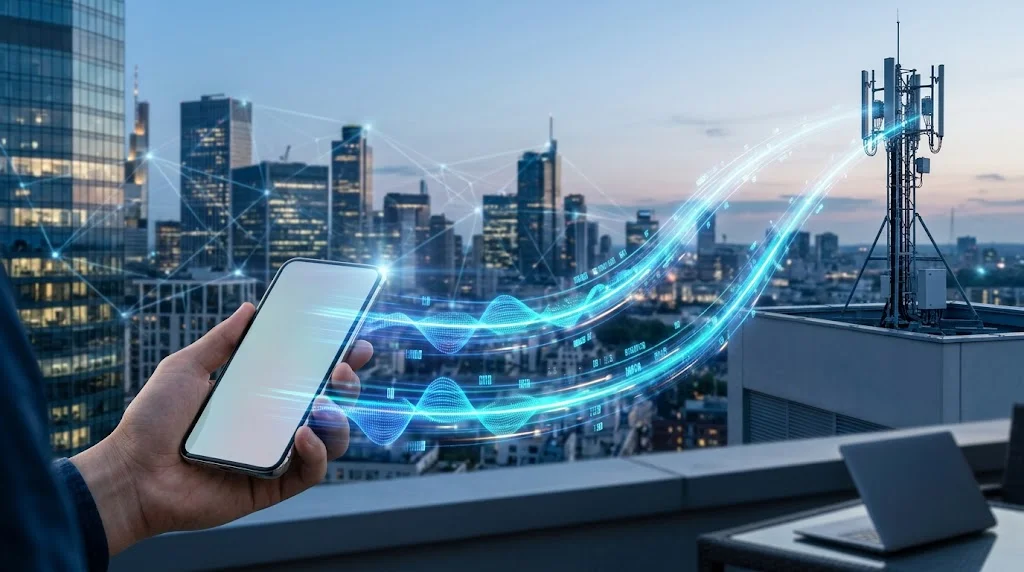
Dual carrier technology is a wireless transmission standard that bonds two distinct radio frequency channels together to transmit data to a single device simultaneously. Rather than forcing all mobile traffic through one radio pathway, the network coordinates two separate signal bands. This effectively doubles the available transmission pipe, leading to higher throughput, lower latency, and more dependable reception.
The term dual carrier originally gained global recognition with third-generation mobile standards, specifically Dual-Carrier HSPA+ or DC-HSDPA. Instead of using a standard 5 MHz frequency block, base stations broadcast data across two adjacent 5 MHz carriers at the same time. The receiving smartphone or modem uses an integrated multi-channel receiver to merge both incoming frequency streams into one coherent, high-speed data flow.
In contemporary conversations, people also use the term to describe running two independent cellular network providers on a single smartphone or industrial gateway. While these two applications refer to different parts of telecom engineering, both aim to solve the same problem: achieving reliable, uninterrupted mobile connectivity.
2. How Dual Carrier Works Under the Hood
To visualize the mechanics, consider a busy two-lane highway where traffic is crawling bumper to bumper. A standard wireless link operates like an on-ramp feeding cars into only one lane. Even if the car can drive quickly, it remains trapped behind slower vehicles. By activating a dual carrier link, the network opens a second parallel lane, instantly splitting the data packets across both paths.
On a technical level, the radio access network monitors connection parameters, including channel quality, signal-to-noise ratios, and tower congestion. When bandwidth requirements spike, the network scheduler assigns two separate component carrier blocks to the user equipment. The tower modulates the incoming data streams across both frequency waves using high-order quadrature amplitude modulation.
The modem inside your phone receives both frequencies, decodes the independent data channels in real time, and reassembles them into your video stream or web page. Because the technology primarily focuses on downlink traffic, download speeds see an immediate lift, while uplink tasks rely on single-channel transmission to conserve device battery and transmission power.
3. Key Benefits: Mobile Internet Speed and Network Capacity
The primary advantage of deploying a dual carrier network is a dramatic improvement in user experience during demanding tasks. By combining two transmission channels, peak theoretical data rates double compared to legacy single-channel configurations. More importantly, real-world data speeds remain remarkably steady even when users move toward the edge of a cell tower’s coverage zone.

Another significant benefit lies in network congestion management. In densely populated areas such as transit hubs, concert venues, or busy business districts, individual radio channels frequently become saturated. Dividing traffic across two synchronized frequencies distributes the processing load across the base station. This drastically reduces packet loss and minimizes ping spikes, which is a major advantage for real-time mobile gaming, cloud file transfers, and uninterrupted video conferences.
4. Dual Carrier vs. Dual SIM: Clearing the Confusion
A common misunderstanding among consumers is conflating multi-frequency data transmission with dual-SIM hardware capabilities. While both terms involve pairs of mobile connectivity elements, they operate at completely different levels of technology.
Dual carrier operates at the radio frequency and physical layer of the telecom network. It refers to how towers transmit radio waves to an antenna. A smartphone needs only one physical SIM card to enjoy dual carrier speeds, provided the carrier supports channel aggregation and the phone modem can tune into both frequencies at once.
Dual SIM, on the other hand, is a hardware design that allows a mobile phone to house two distinct subscriber identities using physical plastic cards, digital eSIM profiles, or a mix of both. This setup enables a user to register with two completely different telecom providers simultaneously. A traveler might keep their domestic carrier active for calls while using a local data SIM abroad. While a dual-SIM phone can switch between networks, that capability is distinct from the radio mechanics that drive true dual carrier transmission.
Dual SIM designs typically operate in Dual SIM Dual Standby (DSDS) mode, where both numbers can receive calls, but taking an active call on one line temporarily suspends data on the other. Premium devices utilize Dual SIM Dual Active (DSDA), where independent modems allow voice and data transmission to run concurrently across both networks.
5. Modern Network Evolution: From 3G DC-HSPA+ to 5G Carrier Aggregation
Wireless standards evolve rapidly, and the foundation laid by dual carrier systems has grown into the backbone of modern broadband infrastructure. In early mobile broadband, DC-HSDPA was an impressive stepping stone, boosting theoretical 3G download speeds from 21 Mbps to 42 Mbps. It showed network operators the incredible power of binding fragmented frequency blocks.
As the industry transitioned into 4G LTE, this channel-bonding technique evolved into carrier aggregation. Instead of pairing just two matching radio channels, 4G LTE Advanced allowed networks to bond three, four, or even five non-contiguous spectrum bands across different frequency ranges. This allowed operators to combine low-band frequencies that penetrate walls with high-band frequencies that carry massive amounts of data.
Today, fifth-generation wireless infrastructure pushes this concept even further through 5G Dual Connectivity, often abbreviated as EN-DC. This system allows a device to connect to a 4G LTE anchor channel and a high-speed 5G mid-band or millimeter-wave channel at the exact same moment. The modern smartphone seamlessly draws data from both generations of wireless hardware, delivering gigabit speeds that trace their conceptual roots back to original dual carrier frameworks.
6. Enterprise Reliability: Dual-SIM Failover and True Carrier Diversity
In enterprise environments, the concept of utilizing two carrier networks takes on an entirely different operational role known as dual-SIM failover. Businesses cannot afford internet outages. Point-of-sale systems, medical alarm monitors, emergency elevators, and branch routers rely on persistent uptime to avoid catastrophic financial or safety impacts.
To safeguard against sudden cellular outages, commercial gateways utilize dual-SIM configurations connected to competing network operators. The appliance establishes its primary connection through one provider while constantly tracking signal strength, packet delivery, and routing latency. If a tower fails, a backhaul cable gets cut, or signal quality drops below acceptable thresholds, the gateway automatically switches to the standby network.
Deploying true carrier redundancy requires careful planning. Many organizations make the mistake of buying service from two separate mobile brands that actually rely on the exact same underlying cell tower or physical infrastructure. If that shared tower loses power, both connections collapse together. True enterprise resilience demands an on-site RF survey to verify that both carriers transmit from independent base stations, ensuring absolute path diversity rather than simple billing diversity.
7. How Modern Smartphones Handle Multiple Networks and eSIM Profiles
Consumers no longer need specialized industrial hardware to enjoy multi-network flexibility. Modern smartphones feature advanced integrated modems capable of managing multi-channel radio aggregation while hosting multiple digital carrier profiles.
With the rise of embedded SIM (eSIM) technology, users can store several cellular plans directly on their phone’s internal storage chip. An iPhone or Android device can hold an everyday personal plan alongside an affordable travel data package or dedicated business line. Devices with modern mobile operating systems include smart network switching features. If you are browsing the web in an area where your primary carrier suffers from a dead zone, the phone can automatically route cellular data through your secondary carrier profile without interrupting your active applications.
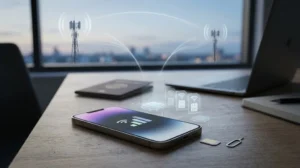
When combined with internal radio chipsets that handle multi-band carrier aggregation automatically, today’s consumer phones operate at a level of network flexibility that enterprise data centers could only dream of a decade ago.
FAQs
Does dual carrier transmission drain a phone battery faster?
Aggregating multiple frequency channels causes the cellular modem and digital signal processor to consume slightly more power during intensive tasks. However, because files finish downloading much faster, the modem returns to an idle low-power state sooner. In everyday usage, this racing-to-sleep mechanism makes the real-world impact on battery life negligible.
Can a dual SIM smartphone have two different carrier networks?
Yes. As long as your phone is carrier-unlocked, you can insert physical SIM cards or activate eSIM profiles from two entirely separate network operators. This allows you to combine networks for expanded coverage, balance costs, or manage personal and work calls on a single device.
How does carrier aggregation differ from dual carrier technology?
Dual carrier specifically describes bonding two frequency bands, originally popularized under 3G DC-HSPA+ standards. Carrier aggregation is the broader, modern evolution used in 4G LTE and 5G networks, allowing operators to combine up to five distinct carrier channels across widely different frequency spectrums.
How long does an automated dual-SIM failover switch take?
Switchover duration depends on whether the device uses a single-radio or dual-radio architecture. Single-radio devices must disconnect, reinitialize the modem, and register with the secondary network, which typically takes between thirty seconds and two minutes. Dual-radio gateways keep both network connections active simultaneously, enabling sub-second failover without dropping current connections.