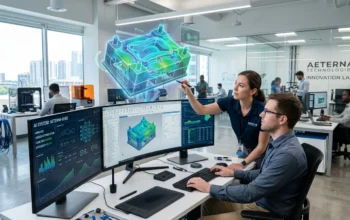
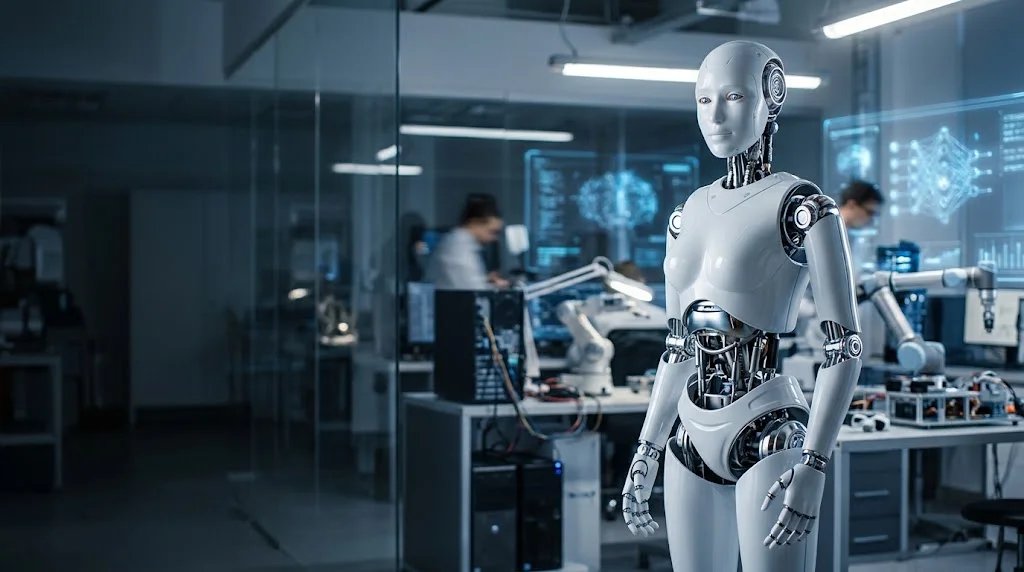
Technological evolution is fundamentally changing how humans view artificial machines. In contemporary tech forums, robotics conferences, and machine learning articles, the phrase ponas robotas has emerged as a compelling concept. While it originally caught public attention through global media, it has evolved into shorthand for a deeper transformation: the transition from mechanical automation to courteous, intelligent, and collaborative machines.
Understanding what this term represents requires analyzing language, technological history, and cutting edge artificial intelligence. This guide explores the complete definition of the phrase and explains how modern engineering is turning science fiction concepts into daily reality.
What Is Ponas Robotas? Linguistic Meaning and Etymology
At its core, ponas robotas is a Lithuanian phrase that translates directly to “Mr. Robot” in English. The phrase consists of two meaningful words:
-
Ponas: A respectful Lithuanian honorific that translates to “Mister,” “Sir,” or “Gentleman.” It carries polite social standing.
-
Robotas: The Lithuanian word for “robot,” describing an automated mechanical or computational system.
When combined, the phrase assigns a respectful human title to a machine. This linguistic choice captures a major philosophical shift in artificial intelligence. Instead of regarding automation as cold, indifferent equipment, society increasingly treats intelligent algorithms as polite companions, helpful assistants, and reliable workplace collaborators.
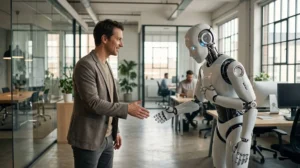
Etymological Roots of Ponas and Robotas
The term ponas holds deep roots in Baltic communication, historically reserved for respected community members. Applying this dignified address to an artificial creation alters our psychological relationship with technology. It suggests an intelligent entity capable of polite interaction, attentive problem solving, and contextual awareness rather than mere repetitive execution.
Karel Capek and the Historical Roots of Robot
The second part of the phrase dates back over a century. Czech dramatist Karel Capek introduced the word robot to global audiences in his landmark 1920 play R.U.R. (Rossum’s Universal Robots). Derived from the Slavic word robota, meaning compulsory labor or servitude, Capek envisioned synthetic workers built solely to carry out industrial tasks.
Over time, this idea entered standard dictionaries across the globe, becoming robotas in Lithuanian. Where early science fiction viewed these creations as enslaved workers, today’s AI systems reflect a far more sophisticated dynamic built on mutual collaboration.
The Cultural Origin: Connecting Pop Culture to Tech Reality
The phrase first secured global recognition when the acclaimed American television drama Mr. Robot was localized for Baltic audiences as ponas robotas. Created by Sam Esmail, the series aired from 2015 to 2019 and redefined how media portrays cyberspace, digital safety, and software architecture.
Rather than portraying computers with unrealistic cinematic effects, the show delivered precise terminal commands, realistic exploit payloads, and authentic cybersecurity methodologies that resonated with software developers worldwide.
The TV Series Mr. Robot as a Cyber Catalyst
The narrative followed Elliot Alderson, an exceptionally talented cybersecurity engineer and vigilante hacker portrayed by Rami Malek in an Emmy winning performance. Alongside a mysterious revolutionary leader portrayed by Christian Slater, Elliot joined fsociety to challenge E Corp, the world’s most dominant multinational corporation.

The localized title allowed Baltic viewers to engage deeply with pressing digital questions. It brought attention to how code, data encryption, and corporate power govern personal freedom, establishing a lasting link between the phrase and modern cyber engineering.
Elliot Alderson, fsociety, and Digital Surveillance
Beyond dramatic storytelling, the narrative served as an early warning regarding excessive digital surveillance. The vulnerabilities that Elliot exploited were rarely algorithmic flaws alone. They were human errors, weak security configurations, and unmonitored infrastructure.
These narrative themes established the groundwork for today’s AI discussions. As automated systems become smarter, the same issues of data sovereignty, digital safety, and personal boundaries remain front and center.
The Evolution of Intelligent Robotics and Machine Learning
The primary reason ponas robotas now trends within modern artificial intelligence circles is that robotics has moved past pre-programmed routines. Yesterday’s industrial systems were rigid tools programmed to repeat a single motion endlessly inside guarded enclosures. Today’s systems possess adaptability and contextual judgment.
Modern intelligent robotics combines physical mobility with machine learning algorithms, giving machines the cognitive capacity to interpret ambiguous data and react to dynamic conditions.
Moving Beyond Rigid Automation to Adaptive AI
Early manufacturing automation was blind to unexpected changes. If an object shifted slightly off center, an assembly arm would miss it or cause mechanical failure. In sharp contrast, modern intelligent systems utilize deep learning neural networks to evaluate situations in real time.
By running complex computer models directly at the edge, machines can inspect items, correct trajectory mistakes, and navigate crowded environments without manual intervention.
Core Technologies: Computer Vision, Sensors, and Cloud Computing
This technological breakthrough is driven by the convergence of three foundational systems:
-
Perception and Vision: Modern hardware integrates depth cameras, LiDAR sensors, and computer vision models. These inputs allow systems to calculate spatial depth, identify obstacles, and recognize objects instantly.
-
Artificial Intelligence and Edge Inference: Onboard neural processing units process language, anticipate movements, and make tactical decisions within fractions of a second.
-
Cloud Architecture and Fleet Learning: Connected machines continuously share edge telemetry with centralized databases, ensuring that a problem solved by one machine improves performance across an entire fleet.
Practical Applications of AI Robotic Systems in Everyday Life
The transition toward gentle, helpful automation is already visible in homes, healthcare networks, and industrial spaces. When tech commentators reference ponas robotas, they are describing smart automation engineered to operate alongside humans safely.
Collaborative Cobots in Modern Industry and Logistics
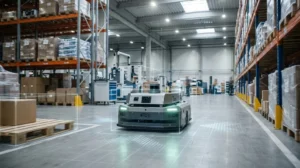
In modern logistics and production centers, the old standard of caged machinery has given way to collaborative robots, widely known as cobots. These machines feature force limiting sensors, rounded chassis designs, and proximity radar to ensure safe operation adjacent to human workers.
Rather than handling all tasks independently, cobots handle monotonous or dangerous responsibilities like palletizing heavy crates, applying precise adhesives, or transporting stock across distribution centers. Human professionals remain in control of higher order tasks like quality assurance, system optimization, and creative problem solving.
Domestic and Healthcare Robotics Transforming Daily Living
In service environments, intelligent systems provide direct community support:
-
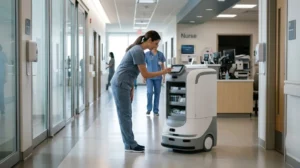
Healthcare Support: Autonomous mobile robots move safely through busy hospital hallways to deliver critical medical supplies, sanitize surgical suites, and assist medical staff.
-
Elderly Assistance: Thoughtfully engineered companion devices remind older adults to take scheduled medications, track vital health statistics, and assist caregivers with remote monitoring.
-
Household Automation: Consumer vacuum cleaners and lawnmowers utilize simultaneous localization and mapping (SLAM) to navigate complex living rooms and yards efficiently.
The Future of AI: Ethics, Security, and Human Collaboration
The rise of conversational AI agents and autonomous hardware introduces significant ethical responsibilities. Just as early fiction questioned the consequences of synthetic workers, today’s developers must address governance, algorithmic transparency, and system safety.
Deploying intelligent systems requires maintaining high standards of digital accountability. As software takes on greater responsibility, users must know how personal information is handled, what training data guides decision making, and who remains liable when automated systems produce errors.
Mitigating Bias, Preserving Autonomy, and Guarding Data Privacy
Intelligent machines rely entirely on the training datasets they consume. If that underlying data contains systemic biases, automated systems can unintentionally mirror those flaws in hiring recommendations, facial verification, or resource allocation.
Furthermore, smart devices equipped with microphones and optical sensors gather immense quantities of personal data. Maintaining clear opt in requirements and encrypted local processing is crucial to safeguarding user dignity and home privacy.
Redefining Work Through Augmentation Rather Than Replacement
A common public concern regarding robotics is widespread job displacement. However, the most productive implementations demonstrate that artificial intelligence works best through task augmentation rather than full human replacement.
By delegating repetitive data tracking, strenuous lifting, and basic clerical processing to automated systems, human professionals can dedicate their time to strategic execution, empathy driven care, and creative innovation. The ultimate goal of this technology is to expand human capability, not eliminate it.
FAQs
What does ponas robotas mean in English?
The literal English translation of ponas robotas is “Mr. Robot.” In Lithuanian grammar, ponas represents “Mister” or “Sir,” and robotas means “robot.”
Is ponas robotas the same as the TV show Mr. Robot?
Yes, the phrase is the localized title used for the American cyber thriller series Mr. Robot in Lithuania. Additionally, the phrase has evolved into an editorial term used to describe helpful, AI driven robotic systems.
Why is the phrase ponas robotas trending in tech discussions?
The phrase connects pop culture storytelling with modern engineering trends. It represents the transition from cold, industrial machinery to polite, intuitive artificial intelligence assistants that communicate naturally with human users.
Are ponas robotas robots replacing human jobs?
No, the focus of modern intelligent robotics is cooperative collaboration. Intelligent systems are primarily designed to handle dangerous, repetitive, or computationally heavy tasks, freeing human professionals to lead complex decision making and creative strategy.
Conclusion:
The narrative arc of ponas robotas illustrates how cultural phrases capture major technological transformations. From its linguistic roots as a polite title to its role as an iconic television title exploring cybersecurity, the phrase now points directly toward the future of artificial intelligence.
As engineers refine machine learning, computer vision, and cognitive architectures, machines are becoming helpful, intuitive partners in daily living. Welcoming this future responsibly requires balancing innovation with strong ethical guidelines, robust cybersecurity, and human centered design. By prioritizing thoughtful collaboration over mindless automation, society can ensure that intelligent machines remain safe, dependable, and beneficial partners for generations to come.